Downloading Jupyter Notebook As Pdf Wont Stop Loading
Jupyter Notebooks in VS Code
Jupyter (formerly IPython Notebook) is an open-source project that lets you easily combine Markdown text and executable Python source code on 1 canvass called a notebook. Visual Studio Lawmaking supports working with Jupyter Notebooks natively, and through Python code files. This topic covers the native support available for Jupyter Notebooks and demonstrates how to:
- Create, open, and save Jupyter Notebooks
- Work with Jupyter code cells
- View, audit, and filter variables using the Variable Explorer and Data Viewer
- Connect to a remote Jupyter server
- Debug a Jupyter Notebook
Setting up your environment
To work with Python in Jupyter Notebooks, y'all must activate an Anaconda environment in VS Code, or another Python environment in which you've installed the Jupyter package. To select an environment, employ the Python: Select Interpreter control from the Control Palette ( ⇧⌘P (Windows, Linux Ctrl+Shift+P)).
In one case the advisable surroundings is activated, yous tin can create and open a Jupyter Notebook, connect to a remote Jupyter server for running code cells, and export a Jupyter Notebook every bit a Python file.
Workspace Trust
When getting started with Notebooks, yous'll want to make sure that you are working in a trusted workspace. Harmful code can be embedded in notebooks and the Workspace Trust feature allows y'all to indicate which folders and their contents should allow or restrict automatic code execution.
If y'all endeavor to open up a notebook when VS Code is in an untrusted workspace running Restricted Mode, you lot will not be able to execute cells and rich outputs will be hidden.
Create or open up a Jupyter Notebook
Y'all can create a Jupyter Notebook by running the Jupyter: Create New Jupyter Notebook command from the Command Palette ( ⇧⌘P (Windows, Linux Ctrl+Shift+P)) or by creating a new .ipynb file in your workspace.

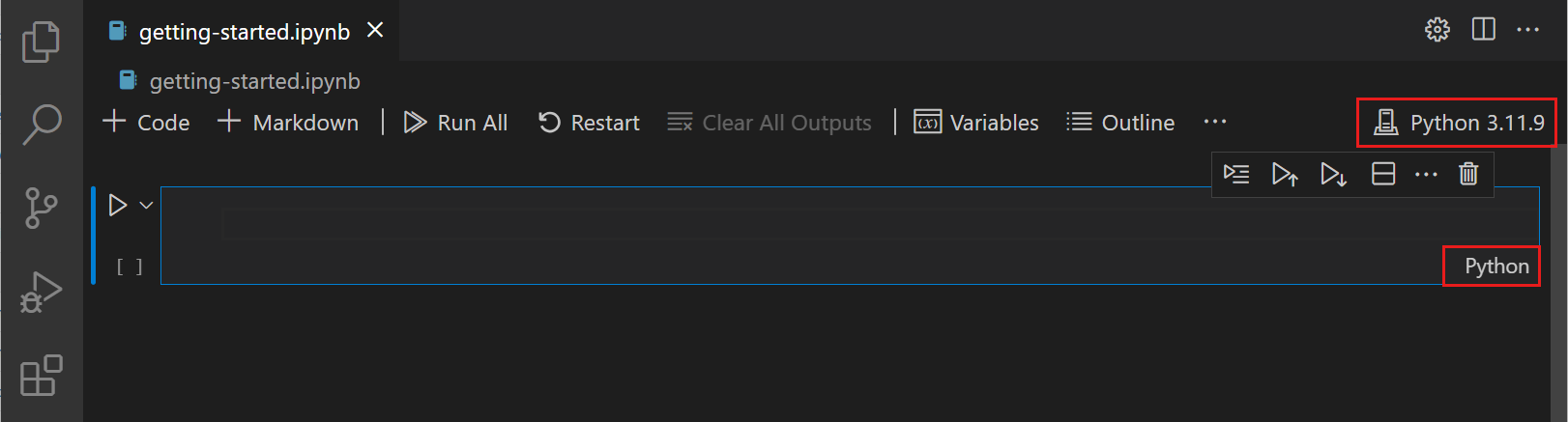
Next, select a kernel using the kernel picker in the top right.
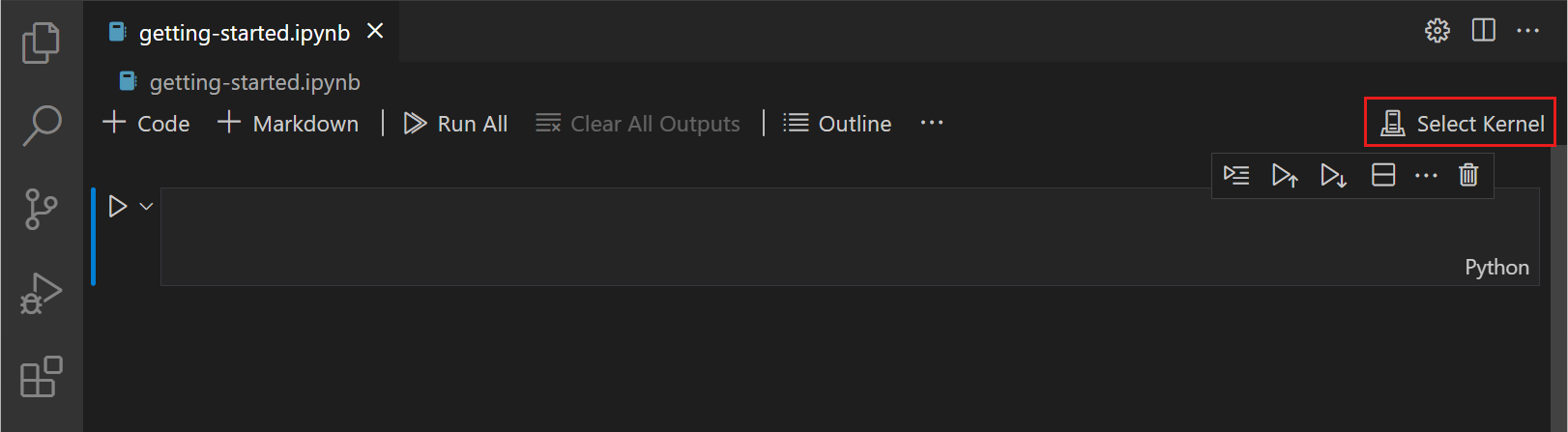
Later on selecting a kernel, the language picker located in the lesser right of each code jail cell volition automatically update to the language supported by the kernel.
If you accept an existing Jupyter Notebook, you lot tin can open it by right-clicking on the file and opening with VS Code, or through the VS Code File Explorer.
Running cells
Once you have a Notebook, you can run a code prison cell using the Run icon to the left of the cell and the output will appear directly below the code cell.
You can also use keyboard shortcuts to run lawmaking. When in control or edit mode, use Ctrl+Enter to run the current cell or Shift+Enter to run the current jail cell and accelerate to the adjacent.

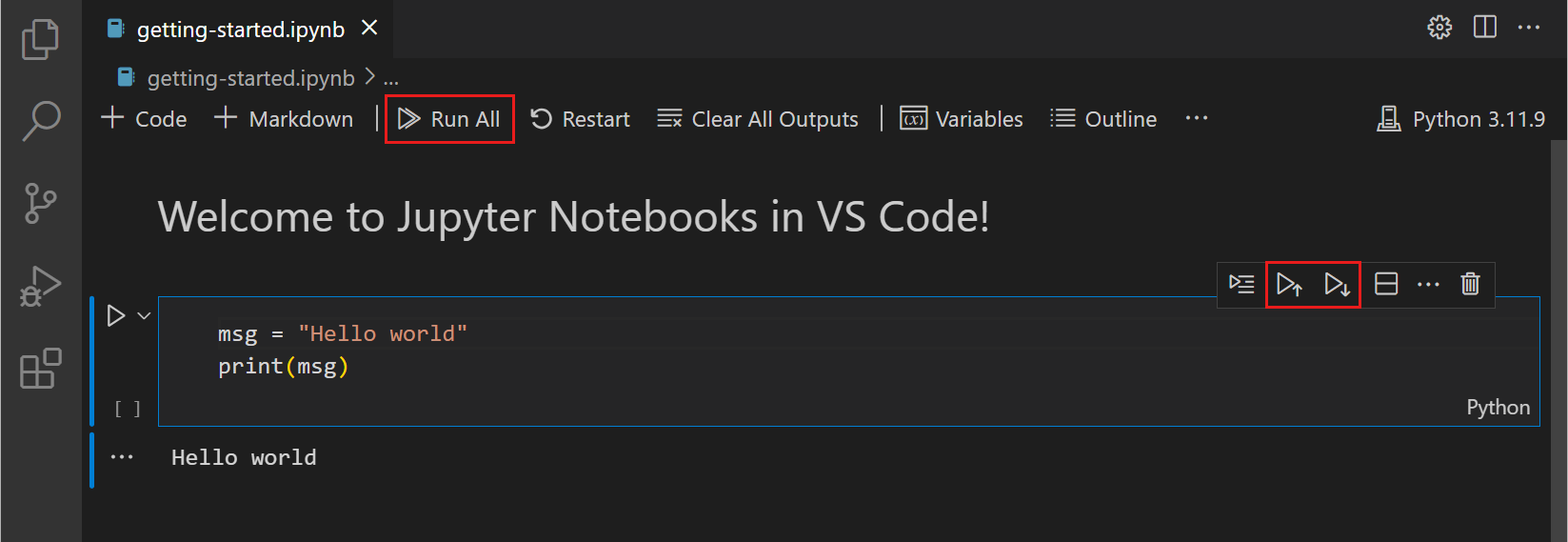
Yous can run multiple cells by selecting Run All, Run All Above, or Run All Below.
Save your Jupyter Notebook
Yous can relieve your Jupyter Notebook using the keyboard shortcut Ctrl+Southward or File > Save.
Export your Jupyter Notebook
You can consign a Jupyter Notebook as a Python file (.py), a PDF, or an HTML file. To export, select the Export activeness on the main toolbar. You'll then be presented with a dropdown of file format options.

Notation: For PDF export, you lot must have TeX installed. If you don't, you will be notified that you need to install it when you select the PDF option. As well, be aware that if you lot accept SVG-merely output in your Notebook, they will not exist displayed in the PDF. To take SVG graphics in a PDF, either ensure that your output includes a non-SVG image format or else you tin can commencement export to HTML and so salvage as PDF using your browser.
Piece of work with code cells in the Notebook Editor
The Notebook Editor makes information technology easy to create, edit, and run code cells within your Jupyter Notebook.
Create a lawmaking cell
Past default, a bare Notebook will have an empty lawmaking jail cell for y'all to start with and an existing Notebook will place one at the bottom. Add your lawmaking to the empty lawmaking prison cell to get started.
msg = "Hi earth" print (msg) 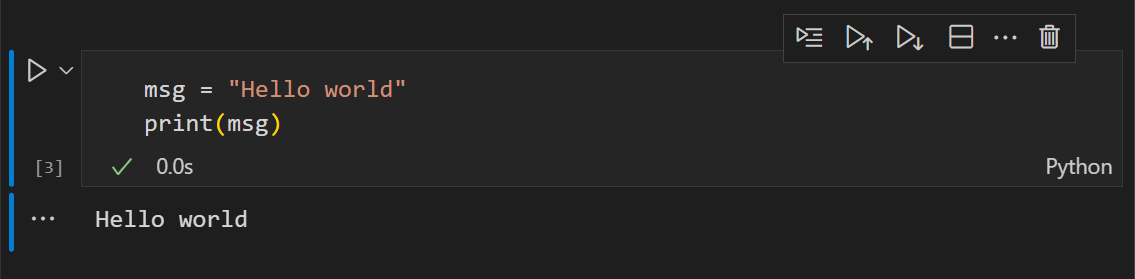
Lawmaking prison cell modes
While working with lawmaking cells, a cell tin be in three states: unselected, command mode, and edit way. The current state of a cell is indicated by a vertical bar to the left of a code cell and editor border. When no bar is visible, the cell is unselected.

When a cell is selected, it tin be in two different modes. It can exist in command mode or in edit fashion. When the jail cell is in command mode, it can be operated on and accept keyboard commands. When the cell is in edit fashion, the jail cell's contents (code or Markdown) can exist modified.
When a jail cell is in command mode, a solid vertical bar will announced to the left of the cell.
When you're in edit style, the solid vertical bar is joined by a border around the cell editor.

To move from edit mode to command mode, press the Esc key. To move from command mode to edit mode, press the Enter cardinal. Y'all can also use the mouse to change the mode past clicking the vertical bar to the left of the cell or out of the code/Markdown region in the lawmaking cell.
Add together additional lawmaking cells
Code cells can be added to a Notebook using the main toolbar, a cell'south add together cell toolbar (visible with hover), and through keyboard commands.
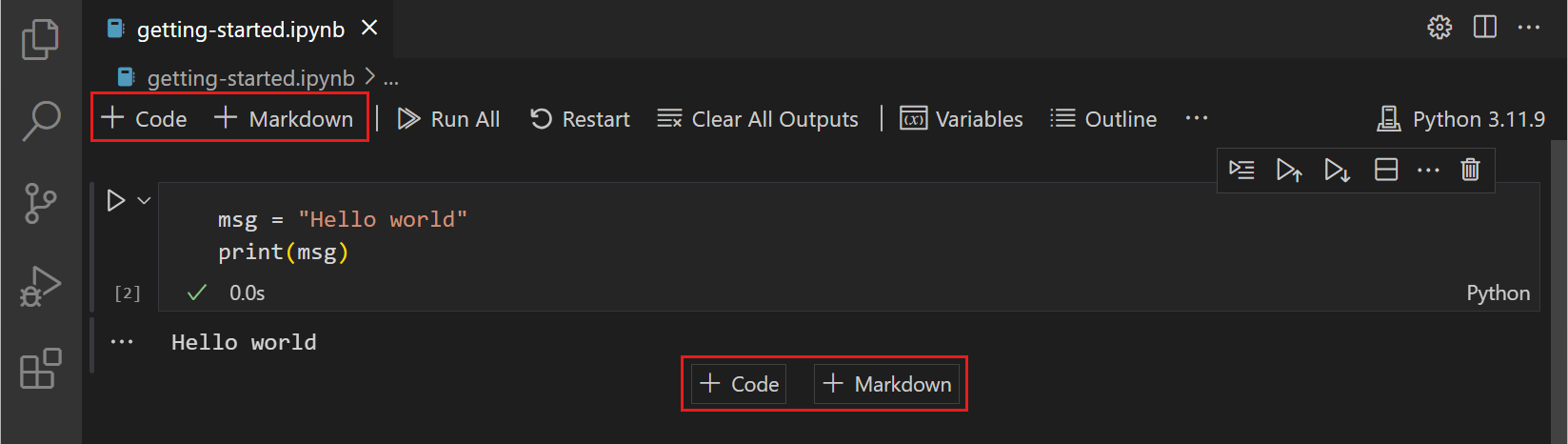
Using the plus icons in the main toolbar and a jail cell's hover toolbar will add a new jail cell directly beneath the currently selected cell.
When a code cell is in command mode, the A key can exist used to add a cell above and the B can exist used to add a cell below the selected prison cell.
Select a code cell
The selected lawmaking cell can be inverse using the mouse, the up/down arrow keys on the keyboard, and the J (down) and K (upward) keys. To employ the keyboard, the prison cell must be in command mode.
Select multiple code cells
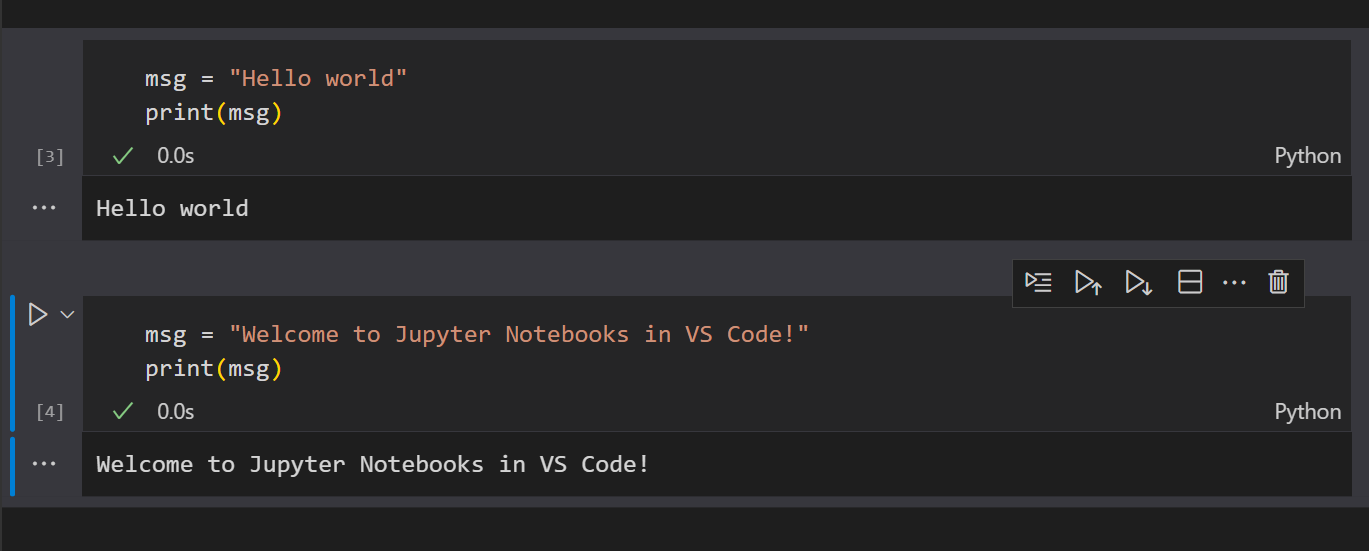
To select multiple cells, commencement with i cell in selected fashion. If you lot want to select sequent cells, hold downwards Shift and click the last prison cell yous want to select. If you lot want to select whatever group of cells, agree downwards Ctrl and click the cells y'all'd similar to add together to your pick.
Selected cells will exist indicated by the filled background.
Run a unmarried code cell
In one case your code is added, you tin can run a cell using the Run icon to the left of the cell and the output will be displayed below the code jail cell.
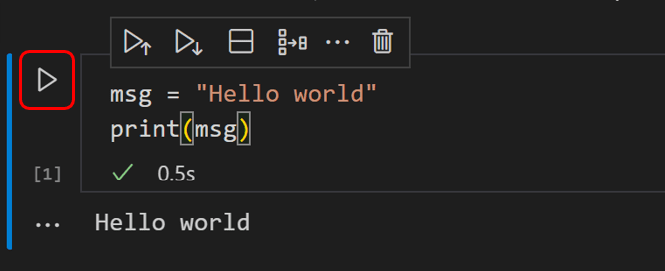
You tin can too use keyboard shortcuts to run a selected code prison cell. Ctrl+Enter runs the currently selected jail cell, Shift+Enter runs the currently selected cell and inserts a new cell immediately below (focus moves to new cell), and Alt+Enter runs the currently selected jail cell and inserts a new prison cell immediately beneath (focus remains on electric current cell). These keyboard shortcuts tin can exist used in both command and edit modes.
Run multiple code cells
Running multiple code cells can be accomplished in many ways. Yous tin use the double arrow in the master toolbar of the Notebook Editor to run all cells within the Notebook or the Run icons with directional arrows in the cell toolbar to run all cells higher up or below the current code cell.
Move a code jail cell
Moving cells up or down within a notebook can be accomplished via dragging and dropping. For code cells, the drag and drop surface area is to the left of the jail cell editor every bit indicated beneath. For rendered Markdown cells, you may click anywhere to drag and drop cells.

To move multiple cells, you tin can utilize the same drag and drop areas in whatever cell included in the pick.
You can also use the keyboard shortcuts Alt+Arrow to movement i or multiple selected cells.
Delete a code cell
Deleting a code cell tin can be accomplished by using the Delete icon in the code prison cell toolbar or through the keyboard shortcut dd when the selected code jail cell is in control mode.

Disengage your last alter
You can apply the z key to undo your previous alter, for instance, if you lot've made an accidental edit, you can undo it to the previous correct state, or if you lot've deleted a cell accidentally, you can recover it.
Switch between code and Markdown
The Notebook Editor allows you to hands modify lawmaking cells betwixt Markdown and code. Selecting the language picker in the bottom right of a cell will allow you to switch between Markdown and, if applicable, any other language supported past the selected kernel.
You can also use the keyboard to change the cell type. When a cell is selected and in command way, the M fundamental switches the jail cell type to Markdown and the Y fundamental switches the cell blazon to code.
Once Markdown is gear up, you can enter Markdown formatted content to the code cell.

To render Markdown cells, you can select the cheque marker in the jail cell toolbar, or use the Ctrl+Enter and Shift+Enter keyboard shortcuts.


Clear output or restart/interrupt the kernel
If you lot'd similar to clear all code prison cell outputs or restart/interrupt the kernel, you tin achieve that using the main Notebook Editor toolbar.

Enable/disable line numbers
When you are in command mode, you can enable or disable line numbering inside a single code jail cell by using the L cardinal.

To toggle line numbering for the entire notebook, apply Shift+L when in command fashion on any jail cell.

Table of Contents
To navigate through your notebook, open the File Explorer in the Activity bar. Then open the Outline tab in the Side bar.
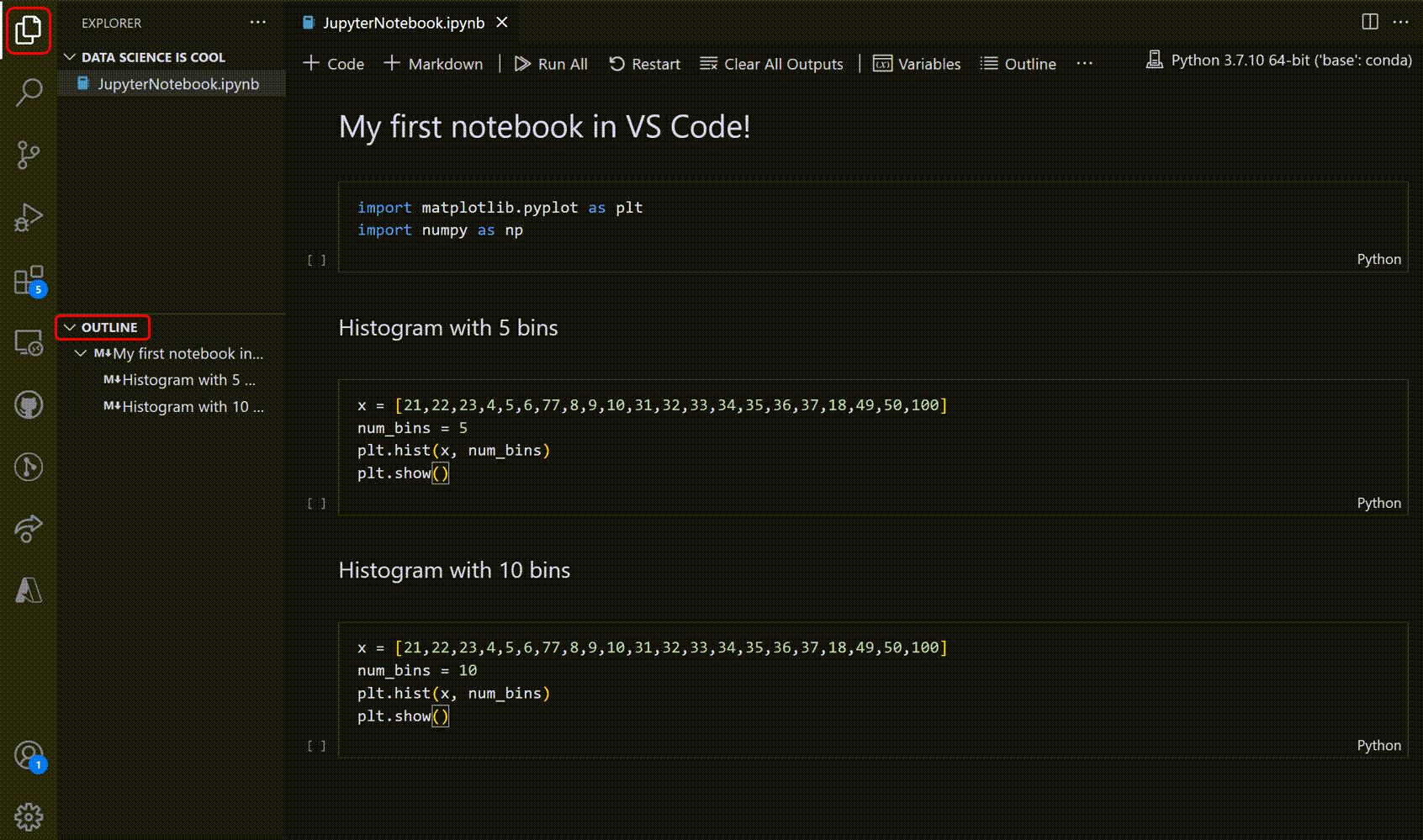
Notation: By default, the outline volition only testify Markdown. To show code cells, enable the post-obit setting: Notebook > Outline: Show Lawmaking Cells.
IntelliSense back up in the Jupyter Notebook Editor
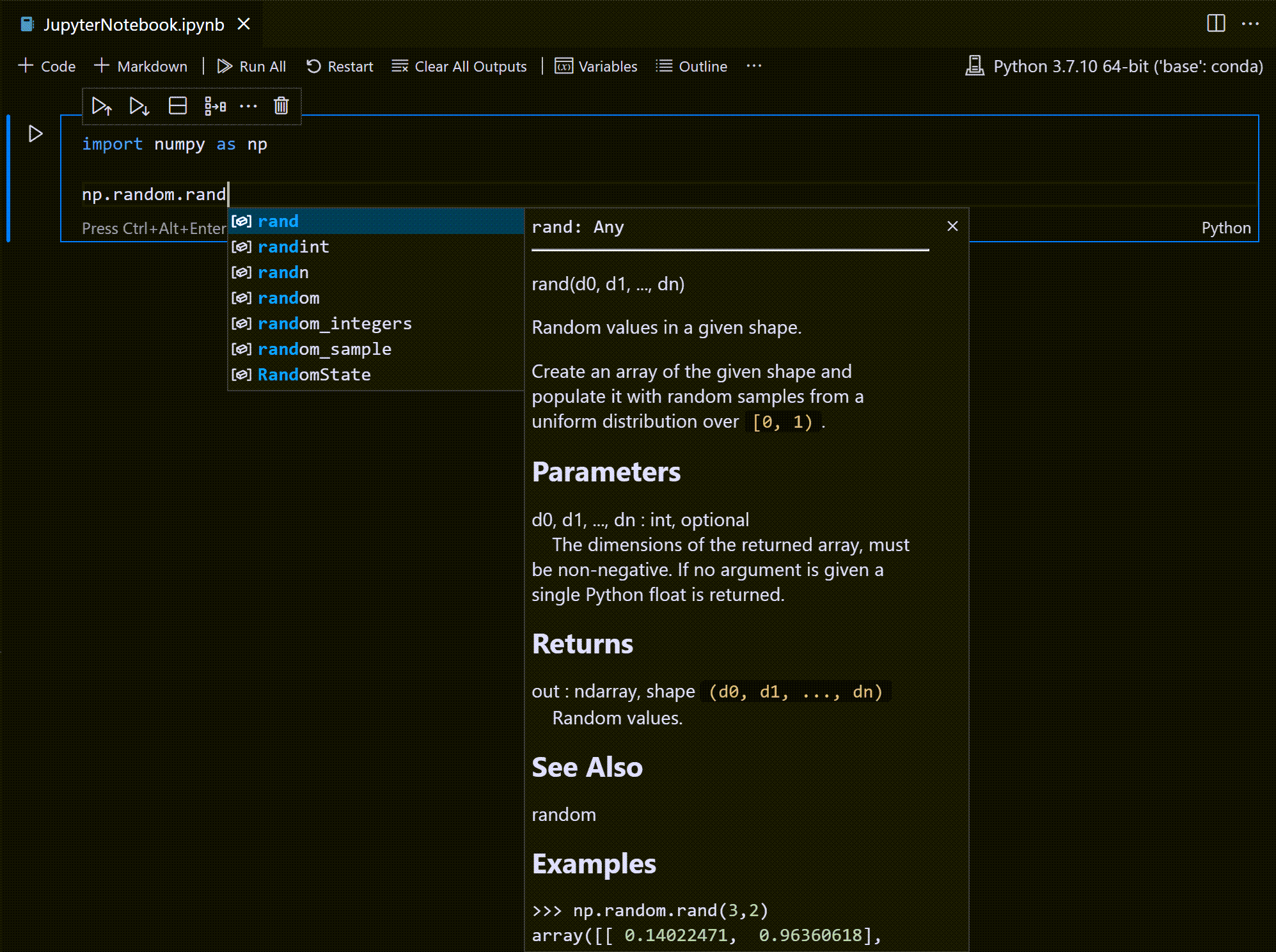
The Python Jupyter Notebook Editor window has full IntelliSense – code completions, member lists, quick info for methods, and parameter hints. You can exist just every bit productive typing in the Notebook Editor window as you are in the lawmaking editor.
Variable Explorer and Data Viewer
Within a Python Notebook, it'due south possible to view, audit, sort, and filter the variables within your current Jupyter session. Past selecting the Variables icon in the main toolbar after running lawmaking and cells, you'll run into a list of the current variables, which will automatically update as variables are used in code. The variables pane will open up at the bottom of the notebook.


Data Viewer
For additional information about your variables, yous can also double-click on a row or utilise the Show variable in data viewer push next to the variable for a more detailed view of a variable in the Data Viewer.

Filtering rows
Filtering rows in the data viewer can exist done by typing in the textbox at the top of each column. Type a string you desire to search for and any row that has that cord in the column will be found:

If you want to detect an exact match, prefix your filter with '=':

More complex filtering can be washed past typing a regular expression:

Saving plots
To save a plot from your notebook, simply hover over the output and select the Save icon in the top right.

Annotation: There is support for rendering plots created with matplotlib and Altair.
Custom notebook diffing
Under the hood, Jupyter Notebooks are JSON files. The segments in a JSON file are rendered every bit cells that are comprised of 3 components: input, output, and metadata. Comparing changes fabricated in a notebook using lined-based diffing is difficult and hard to parse. The rich diffing editor for notebooks allows you lot to easily meet changes for each component of a cell.
You lot can even customize what types of changes you want displayed within your diffing view. In the top right, select the overflow menu item in the toolbar to customize what jail cell components you want included. Input differences will always be shown.

To acquire more than near Git integration within VS Code, visit Version Control in VS Code.
Debug a Jupyter Notebook
There are two dissimilar ways to debug a Jupyter notebook: a simpler style chosen "Run past Line", and full debugging manner.
Note: Both of these features require ipykernel 6+. See this wiki page for details about installing or upgrading ipykernel.
Run by Line
Run by Line lets you lot execute a cell ane line at a time, without being distracted by other VS Code debug features. To outset, select the Run by Line button in the prison cell toolbar:

Use the aforementioned push button to advance past 1 argument. You lot can select the cell Stop push button to cease early, or the Go along button in the toolbar to go on running to the end of the prison cell.
Debug Jail cell
If you want to utilize the total set of debugging features supported in VS Code, such as breakpoints and the power to step in to other cells and modules, you can use the full VS Code debugger.
- Starting time by setting whatever breakpoints you need by clicking in the left margin of a notebook cell.
- Then select the Debug Cell button in the menu next to the Run button. This volition run the cell in a debug session, and volition pause on your breakpoints in any code that runs, even if information technology is in a unlike cell or a
.pyfile. - You can utilize the Debug view, Debug Panel, and all the buttons in the Debug Toolbar as you normally would in VS Lawmaking.

Connect to a remote Jupyter server
You lot can offload intensive computation in a Jupyter Notebook to other computers by connecting to a remote Jupyter server. In one case connected, code cells run on the remote server rather than the local computer.
To connect to a remote Jupyter server:
-
Select the Jupyter Server: local button in the global Status bar or run the Jupyter: Specify local or remote Jupyter server for connections control from the Command Palette ( ⇧⌘P (Windows, Linux Ctrl+Shift+P)).

-
When prompted to Choice how to connect to Jupyter, select Existing: Specify the URI of an existing server.

-
When prompted to Enter the URI of a Jupyter server, provide the server'south URI (hostname) with the authentication token included with a
?token=URL parameter. (If you start the server in the VS Code terminal with an authentication token enabled, the URL with the token typically appears in the final output from where you tin can copy it.) Alternatively, you can specify a username and countersign after providing the URI.
Note: For added security, Microsoft recommends configuring your Jupyter server with security precautions such as SSL and token support. This helps ensure that requests sent to the Jupyter server are authenticated and connections to the remote server are encrypted. For guidance almost securing a notebook server, refer to the Jupyter documentation.
DOWNLOAD HERE
Posted by: smithtoply1940.blogspot.com
Post a Comment